How Much Does an Auto Wrap Cost in Toronto?
A professional full vehicle wrap typically costs between $3,000 and $6,000+ CAD, while partial wraps range from $500 to $2,500+ CAD. A wrap quote is not a flat rate; it is built on three distinct cost centers: material, labour, and one-time line items. Because different vinyl finishes have varying lifespans, the most accurate way to evaluate a quote is by calculating its cost per year. For example, a $3,600 standard gloss wrap with an $800 removal cost would have an estimated total cost of $4,400. If the wrap lasts 5–7 years, that works out to approximately $630–$880 per year. This guide breaks down exactly how wrap quotes are calculated, what factors drive the price up, and how to compare estimates fairly.
Key Takeaways
- A professional full auto wrap in the Toronto area typically costs $3,000 to $6,000+ CAD before Ontario’s 13% HST. Partial wraps run $500 to $2,500+, and vinyl lettering $150 to $1,000+.
- Film is a minority of the price. Raw cast film such as 3M Wrap Film Series 2080 accounts for roughly 15–25% of an installed quote; labour, preparation, consumables, and warranty make up the rest.
- Cost per year is the better comparison metric. A $3,600 sedan wrap that lasts five to seven years costs roughly $630–$880 per year including removal; a chrome wrap can exceed $3,000 per year.
- Quotes are only comparable when they specify film brand and series, coverage scope, preparation, removal, warranty terms, and whether 13% HST is included.
What Does an Auto Wrap Cost? Typical Price Ranges
Auto wrap pricing is usually quoted by coverage level, then adjusted for vehicle size and film. Toronto Car Wrap publishes the following ranges for the GTA, all before HST:
| Coverage level | Typical price (CAD, before HST) |
| Full car wrap | $3,000–$6,000+ |
| Partial car wrap | $500–$2,500+ |
| Vinyl lettering and decals | $150–$1,000+ |
| Specialty films (chrome, colour-shift) | $5,000–$10,000+ |
Within the full-wrap band, sedans land at $3,000–$4,200, SUVs at $3,800–$5,200, and trucks and vans at $4,500–$6,500+. The complete breakdown by vehicle class is maintained on the car wrap cost Toronto page. For a US benchmark, Kelley Blue Book places a full wrap at roughly US$2,000–$10,000, with an installed rate of about US$12–$16 per square foot. The differences between individual quotes come from the components below.
How Installers Build an Auto Wrap Quote
A professional vehicle wrap quote has three cost centres: material, labour, and one-time line items:
Material: Film Type, Series, and Yield
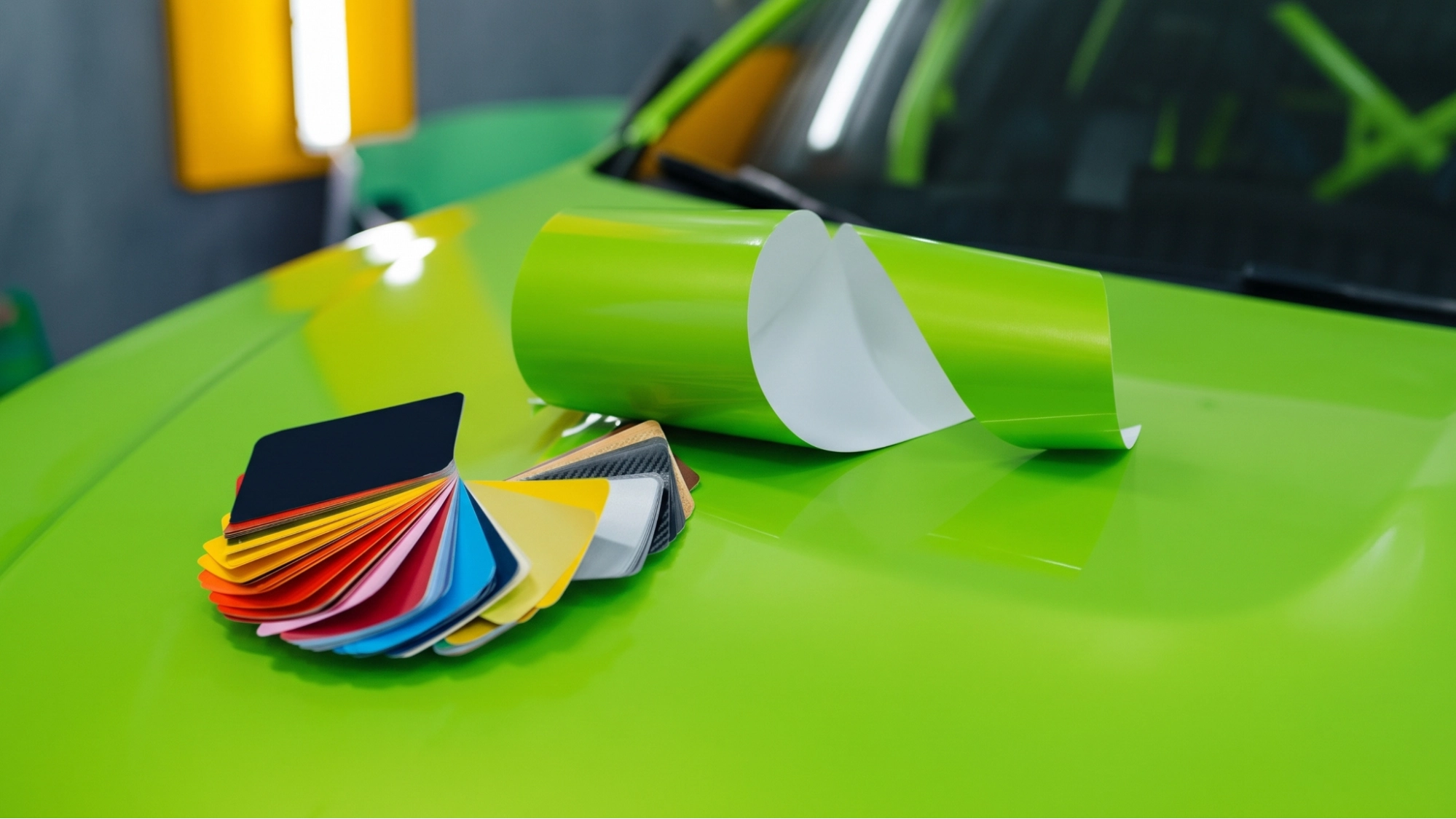
Vehicle wraps use cast vinyl like 3M Wrap Film Series 2080, which is often poured and cured as a liquid to conform to compound curves without shrinking. It is supplied in 60-inch (1,524 mm) rolls to ensure most panels can be covered without seams. Here is how the baseline material costs break down for standard colours:
- Per linear foot: $15–$20 CAD
- Per square foot: $3.00–$4.00 CAD
- Material required for a full wrap: 250–300 sq ft (a standard 50-to-60-foot roll)
- Total roll cost: $750–$1,200 CAD
- Material percentage: Raw film accounts for just 15–25% of a typical $3,000–$6,000+ CAD finished quote (and less once an installer applies wholesale pricing).
Keep in mind that textured, metallic, and chrome films cost more per foot and carry shorter durability ratings, which increases both the upfront price and the cost per year.
Labour: Hours, Disassembly, and Complexity
Labour is the largest line item on most invoices and the primary reason vehicle wrap costs vary so much between shops. The main factors driving your labour costs include:
- Installation Time: A full vehicle wrap can take several days to complete, depending on vehicle size, panel complexity, disassembly requirements, preparation, and the installer’s process.
- Vehicle Complexity: Deep recesses, aggressive bumpers, and roof rails require significantly more time and precision than a smooth-sided sedan.
- Disassembly: Removing trim, lighting, and hardware allows installers to properly tuck edges (rather than cutting them flush), which adds hours to the job but creates a seamless look.
- Facility Overhead: Premium labour rates include access to a climate-controlled bay, calibrated post-heating, and thorough final inspections. These steps separate a wrap that lasts for years from one that peels within a season.
One-Time Line Items That Move the Total
Several charges appear on some quotes and not others, which is where most apples-to-oranges comparisons originate:
- Design, proofing, and printing for commercial graphics: $300–$1,000+ for design alone, plus print and lamination.
- Paint correction or repairs: variable. Wraps magnify underlying surface imperfections like rock chips. Furthermore, vinyl film will fail to adhere to rust or peeling clear coat, which is why these issues must be repaired prior to installation.
- Removal of an existing wrap or decals: $500–$1,500 depending on age and condition.
- HST: Ontario’s 13% harmonized sales tax is frequently excluded from advertised pricing.
- Optional protection: a ceramic coating can add to the total cost. Pricing varies by vehicle, coating product, preparation, and installer. Confirm compatibility with the wrap manufacturer’s warranty before installation.
Request each of these as a separate line. A quote that folds them into a single number cannot be compared with one that itemizes them.
Cost Per Year vs. Upfront Price
Upfront price can be misleading because the type of vinyl you choose plays a factor in how long it lasts year over year. Dividing total cost of ownership by expected service life produces a cost per year that makes different films and coverage levels directly comparable.
Service life depends on film category and exposure. Standard cast films in gloss, satin, or matte typically last five to seven years in Toronto conditions; specialty films last around two to five. UV exposure, acid rain, and direct elemental weathering degrade roofs and hoods first, while road salt and debris heavily impact lower vertical panels.
| Scenario (CAD, before HST) | Upfront | Removal at end of life | Service life | Approximate cost per year |
| Full wrap, sedan, gloss cast film | $3,600 | $800 | 5–7 years | $630–$880 |
| Full wrap, SUV, satin cast film | $4,500 | $1,000 | 5–7 years | $790–$1,100 |
| Partial commercial wrap, including design | $2,000 | $500 | 5 years | $500 |
| Full chrome wrap | $8,000 | $1,200 | 2–3 years | $3,070–$4,600 |
Figures use the midpoints of Toronto Car Wrap’s published ranges and are illustrative. The pattern holds regardless of the exact inputs: coverage level sets the upfront price, but film category sets the cost per year.
The main factors that affect auto wrap cost are vehicle size, coverage area, vinyl type and finish, vehicle condition, preparation and disassembly, design requirements, and removal of existing vinyl. Larger or more complex vehicles and specialty films generally require more material and labour, increasing the final quote.
Personal Colour-Change vs. Commercial Wrap Costs
The same vehicle can generate two different quotes depending on purpose. A personal colour-change wrap uses unprinted cast film straight from the roll, so material and labour dominate the price. A commercial wrap adds design, proofing, printing on a print-grade film, and an overlaminate before installation, which is why commercial pricing carries additional line items at the same coverage level.
Businesses weigh those costs against exposure rather than aesthetics. The commercial fleet wrap ROI analysis and the trailer wrap cost and advertising guide cover that calculation, including how partial coverage on high-visibility panels lowers cost per vehicle. Commercial quotes should also state whether design revisions and vector logo preparation are included, since both add billable hours.
Wrap vs. Paint vs. PPF: Which Costs Less Over Time?
A vinyl wrap, a quality respray, and paint protection film solve different problems, and a cost comparison only makes sense within the problem being solved. For a colour change, a full car wrap is reversible and generally less expensive than a comparable respray, which is why the car wrap vs. paint job comparison favours vinyl for owners who plan to sell or return a leased vehicle.
For paint protection rather than appearance, PPF is thicker and priced higher per square foot. The PPF vs. vinyl wrap guide sets out where each applies. KBB reaches a similar conclusion, recommending partial PPF with a ceramic coating when protection alone is the goal.
How to Compare Auto Wrap Quotes on Equal Terms
Two quotes are comparable only when they answer the same questions. Before choosing an installer, confirm the following in writing:
- Film brand and series, not just brand. Warranty and durability are tied to the product line.
- Definition of “full wrap.” Door jambs, inner edges, and trim removal are not universally included.
- Preparation scope. Decontamination, clay treatment, and any paint correction should be itemized.
- Removal and residue cleanup, if a previous wrap or decals are present.
- Two warranties. The manufacturer’s film warranty and the installer’s workmanship warranty are separate. Ask for the term and coverage of each.
- HST treatment. Whether the 13% is included or added.
A detailed review of the individual pricing variables is available in the vinyl wrap cost factors guide.
Why Choose Toronto Car Wrap
- Fully itemized quotes detailing film, scope, preparation, and warranties.
- Climate-controlled Vaughan facility ensures long-lasting, flawless film adhesion.
- Uses premium, durable cast vinyls.
- Meticulous hardware disassembly allows for clean, tucked edge installation.
- Calibrated post-heating and final inspections prevent premature edge lifting.
- Conveniently serves Toronto, Mississauga, Brampton, and the wider GTA.
- Specializes in both personal colour changes and commercial fleet graphics.
Itemized Auto Wrap Pricing From Toronto Car Wrap
Toronto Car Wrap installs full wraps, partial wraps, vinyl lettering, and commercial fleet graphics from a climate-controlled facility at 50 Corstate Avenue in Vaughan, serving Toronto, Mississauga, Brampton, and the wider GTA. Every quote is itemized by film series, coverage scope, preparation, and warranty so that it can be compared line by line against any other estimate.
To receive a written quote for a specific vehicle, submit the year, make, model, current paint condition, and intended coverage through the contact page. Personalized quotes are provided before HST and specify the exact film to be installed.
Frequently Asked Questions
How much does it cost to wrap a car in Toronto?
A professional full car wrap in Toronto can typically cost $3,000 to $6,000+ CAD before HST, with sedans at the lower end and trucks, vans, and large SUVs at the upper end. Partial wraps range from $500 to $2,500+, and specialty finishes such as chrome or colour-shift film start around $5,000. These are only general estimates. Final pricing always depends on film series, coverage scope, and paint condition.
Is it cheaper to wrap a car or paint it?
For a colour change, wrap and paint costs vary based on vehicle size, materials, preparation, finish, and the quality of the installation or respray. For a colour change, a wrap also offers reversibility, while a respray is a permanent change to the vehicle’s finish. A wrap has a defined service life of roughly five to seven years, while paint is permanent. Low-cost resprays can undercut wrap pricing, but they rarely match factory finish quality or durability.
How long does a car wrap last?
Standard cast films in gloss, satin, or matte finishes typically last five to seven years in Toronto conditions. Specialty films such as chrome, brushed metal, or colour-shift can last two to five years.
Why are car wraps so expensive?
Labour is the largest component of auto wrap cost. A full wrap requires one to five or more days of skilled installation, including decontamination, trim removal, heat forming, edge tucking, and post-heating. Cast film from manufacturers such as 3M or Avery Dennison, facility overhead for a climate-controlled bay, and warranty coverage make up the remainder. Film alone is a minority of the price.
How much does it cost to wrap a truck or SUV?
Full wraps on SUVs such as a RAV4 or Model Y typically cost $3,800 to $5,200 CAD in the Toronto area, while trucks and vans such as an F-150, Sprinter, or Transit run $4,500 to $6,500+ before HST. Larger panels, roof height, and additional hardware removal increase both material yield and labour hours compared with a sedan.
How much is a partial car wrap?
Partial wraps cost $500 to $2,500+ CAD depending on the panels covered and design complexity. Common configurations include hoods, roofs, and rear sections for personal vehicles, or doors and rear panels for commercial branding. Because they concentrate coverage on high-visibility areas, partial wraps can reduce the upfront cost by covering selected panels rather than the entire vehicle. The final price depends on which panels are covered, the film selected, preparation, and design complexity.
Does a car wrap damage the paint or lower resale value?
When professionally installed and removed from sound, properly cured paint, vinyl wrap is generally designed to be removable without damaging the underlying finish. Results can vary with paint condition, previous repairs, film age, and removal technique. Problems occur when film is applied over failing clear coat, repainted panels, or rust, or when it is removed improperly. Many owners remove the wrap before sale to present the original finish.
How much does it cost to remove a car wrap?
Professional wrap removal typically costs $500 to $1,500 CAD depending on the film’s age, condition, and the amount of adhesive residue left behind. Older or sun-degraded film tends to fragment and takes longer to remove. Removal cost should be included when calculating a wrap’s total cost per year, particularly for specialty films with shorter service lives.