For car enthusiasts who just dropped serious cash on a gorgeous new vinyl wrap and are now asking whether you can apply PPF over the vinyl wrap, the short answer is yes. However, understanding wrap compatibility, limitations & best practices for protection should be taken into account.
From Toronto Car Wrap’s hands-on shop experience, PPF is a great way to shield that delicate new finish from track debris and highway rock chips. Layering paint protection film over a car wrap hinges heavily on your wrap’s current condition, the specific finish types being paired, and the tension at the panel edges.
Key Takeaways
- PPF can be applied over vinyl wrap, but only when the wrap is fully cured, in good condition, and has a smooth (typically gloss) finish.
- PPF can be installed over vinyl wrap, but warranty coverage and installation requirements vary by film manufacturer and product. Check the applicable PPF and vinyl warranty terms before installation.
- Partial coverage of high-impact zones (front bumper, hood edge, rocker panels, mirrors) is the most common and cost-effective approach.
- Removing layered films carries risk: pulling PPF off later can lift or tear the vinyl underneath.
- Matte, satin, and textured wraps are generally poor candidates; matte PPF over a gloss wrap is possible but permanently changes the finish appearance.
Can You Apply PPF Over Vinyl Wrap?
Yes, with conditions. Professional installers can and do apply PPF over vinyl wrap, most often to protect an expensive colour-change wrap from stone chips and road debris. The combination succeeds only when several criteria are met:
- The wrap is fully cured. A freshly installed wrap should outgas for at least two to four weeks before PPF is applied. Trapped solvents can cause bubbling under the PPF.
- The wrap is in sound condition. Any lifting edges, bubbles, scratches, or contamination will be locked in — and often magnified — under the PPF.
- The finish is smooth gloss. Gloss vinyl provides the flattest bonding surface. Textured, chrome, colour-shift, and matte films create adhesion and appearance problems.
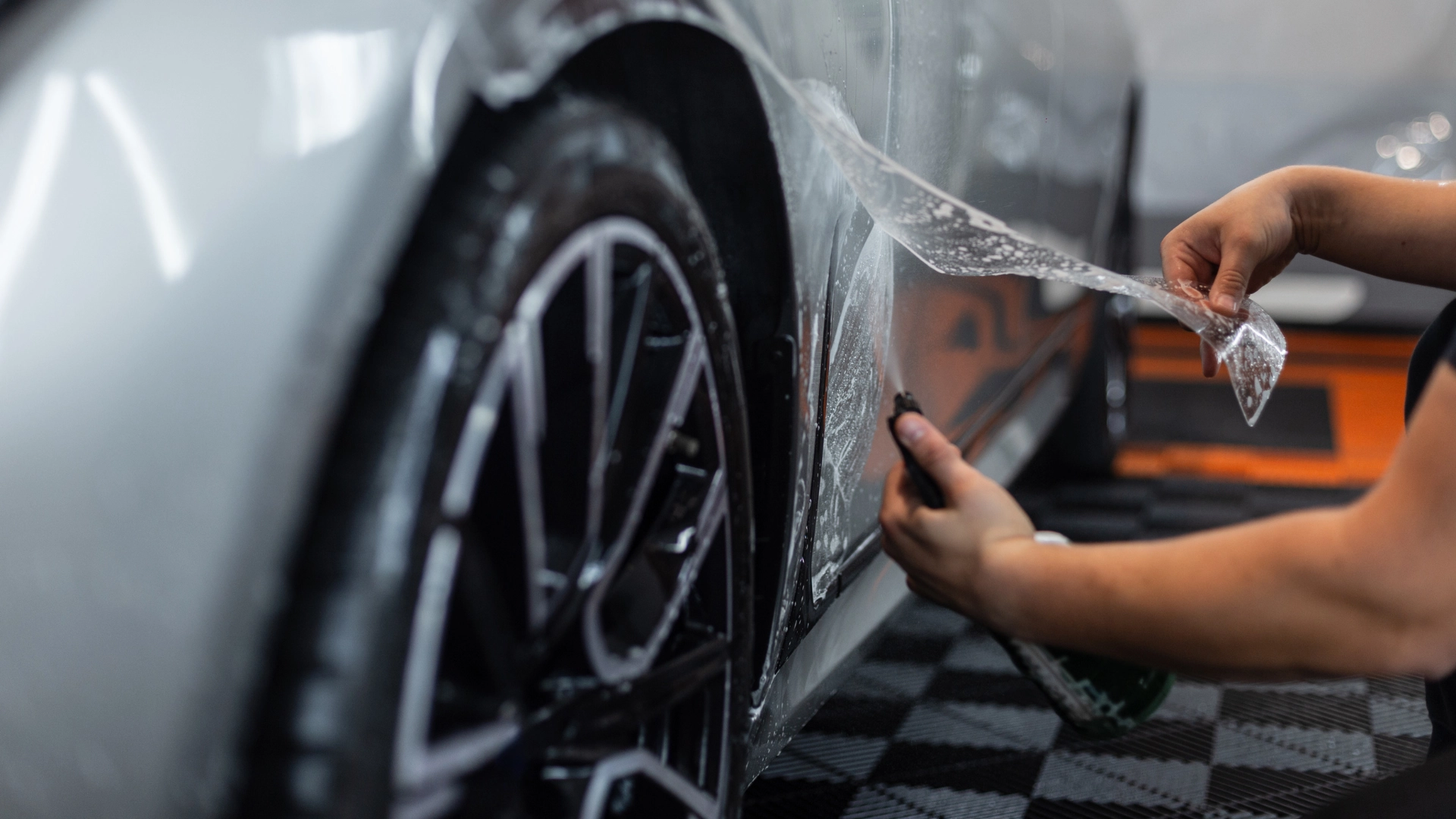
- The installer adjusts technique. Slip solution chemistry, squeegee pressure, and edge placement all differ from paint installation. Aggressive wrapping of PPF edges around panels can pull the vinyl up with it.
When these conditions are not met, applying PPF is more likely to damage the wrap than protect it.
How PPF and Vinyl Wrap Differ
| Feature / Characteristic | Paint Protection Film (PPF) | Automotive Vinyl Wrap |
| Material Composition | Thermoplastic Polyurethane (TPU) | Polyvinyl Chloride (PVC) |
| Film Thickness | 8–10 mil (Thick and highly durable) | 3–4 mil (Thin and highly conformable) |
| Primary Purpose | Impact protection, abrasion resistance, and preserving the finish beneath. | Aesthetics, custom colour changes, and intricate graphic applications. |
| Surface Properties | Self-healing topcoat (light scratches disappear with heat or sun exposure). | Softer, more flexible surface; generally lacks self-healing properties. |
| Installation Method | Wet Application: Stretched and squeegeed using a liquid slip solution and tack solution. | Dry Application: Heat-formed, stretched, and then post-heated to “set” the material’s memory. |
| Adhesive Design | Engineered for a permanent, aggressive bond to hard automotive clearcoat. | Engineered for a semi-permanent bond; easier to remove when it’s time for a new colour. |
| Toronto Market & Climate Durability | Exceptional. Built to withstand heavy road salt, sand, and high-velocity rock chips from the 401, DVP, or QEW. Will not degrade easily in freezing temperatures. | Moderate. Vulnerable to winter road salt, brine, and sandblasting. Winter temperature swings can make the PVC brittle over time if not properly maintained. |
| Average Lifespan (GTA Environment) | 7 to 10+ years (often backed by extensive manufacturer warranties against yellowing/cracking). | 3 to 5 years (heavily dependent on whether the car is garage-kept or winter-driven). |
| Cost Expectation (Toronto Shops) | Premium investment. Full-vehicle coverage often runs $4,500 – $7,000+ CAD due to material costs and intensive prep. | More accessible. Full-vehicle colour change typically ranges from $2,500 – $4,500 CAD depending on the vehicle and vinyl finish. |
For a full comparison of the two films as standalone options, see our guide on PPF vs vinyl wrap.
PPF Over Vinyl Layering Impact
Because vinyl is a softer, thinner plastic applied dry, putting a wet-applied, high-tension PPF on top forces the heavy-duty PPF adhesive to bond to a flexible surface rather than a solid clearcoat. If the PPF needs to be repositioned during installation, or eventually removed, its aggressive adhesive can easily pull the weaker vinyl right off the car’s panels.
Limitations and Risks to Understand Before Layering Films
Reduced Adhesion and Warranty Coverage
PPF adhesives are formulated and tested against OEM clearcoat. On vinyl, bond strength is lower and long-term performance is less predictable. Warranty coverage for PPF installed over vinyl depends on the specific PPF and vinyl products and their applicable warranty terms. Most major PPF manufacturers either exclude installations over vinyl from warranty coverage or limit it significantly. Reputable shops will state this plainly rather than imply factory-equivalent guarantees.
Removal Complications
Films age together. When the PPF is eventually removed typically after 5–10 years, or sooner if damaged, its adhesive may have bonded more strongly to the vinyl than the vinyl has to the paint. The result can be vinyl lifting, tearing, or delaminating during PPF removal, forcing replacement of both layers. Owners should budget for this scenario rather than assume the wrap survives PPF removal intact.
Finish and Thickness Changes
Layered films add roughly 12–14 mil of combined thickness at panel edges and seams, which can be visible on close inspection. PPF also alters appearance: gloss PPF deepens gloss slightly, while matte PPF over gloss wrap converts the finish to satin/matte. Some owners use this deliberately as a finish-change strategy, but it is not reversible without removing the PPF.
Cost Considerations
Full-body PPF over a full wrap effectively doubles film investment on the vehicle. In many cases, a colour PPF product, if available, is the more rational specification for a new project as it combines colour change and protection in a single layer. Layering makes practical sense when a quality wrap is already installed and worth protecting.
When PPF Over Vinyl Wrap Makes Sense: Practical Use Cases
- Partial front-end protection. Covering the front bumper, hood leading edge, fenders, and mirrors shields the zones that absorb most road debris while keeping cost proportionate.
- Rocker panels and door edges. High-abrasion areas on daily drivers and trucks benefit from targeted PPF without full-body coverage.
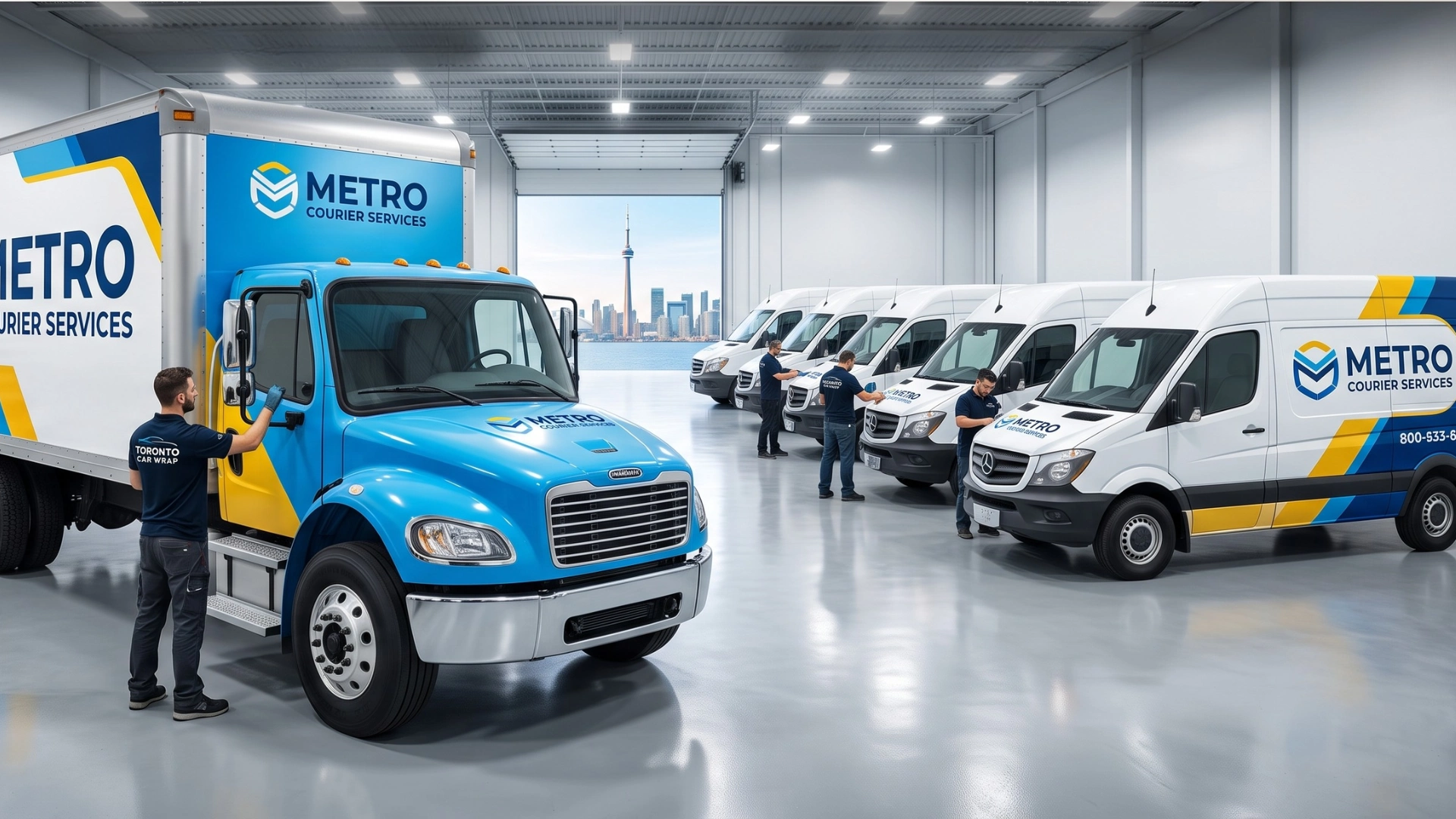
- Commercial and fleet graphics. Wrapped work vehicles accumulate chips quickly; PPF over printed panels extends graphic life. Toronto Car Wrap handles large-format commercial work in our exclusive indoor truck wrap facility, where climate control supports proper film curing.
- Show and collector vehicles. Owners protecting rare or discontinued wrap colours often accept the warranty trade-offs to preserve an irreplaceable finish.
For vehicles without an existing wrap, standalone paint protection film in Toronto applied directly to paint remains the stronger technical solution.
Why Professional Installation Layering Matters
DIY layering fails at a high rate. Professional installation matters because:
- Surface assessment: Installers like Toronto Car Wrap verify wrap cure state, adhesion, and defects before quoting.
- Edge strategy: Leaving a slight margin inside wrap edges prevents lift; wrapping PPF around vinyl edges is a common DIY failure point.
- Environment: Dust-free, temperature-controlled bays prevent contamination between layers, where debris is permanently visible.
- Film pairing: Matching PPF adhesive systems to specific vinyl brands reduces long-term delamination risk.
- Honest scoping: A professional will decline to install over a wrap that cannot support PPF, thereby protecting the client’s existing investment.
Why Choose Toronto Car Wrap
- Certified installers experienced in both vinyl wrap and PPF systems
- Honest pre-installation assessments for your existing wrap
- Climate-controlled indoor installation facility, including full-size truck capacity
- Premium film brands with documented, transparent warranty terms
- Precision edge placement that protects wrap integrity during and after installation
- Local Toronto shop familiar with winter road salt, gravel, and 400-series highway debris conditions
- Written quotes covering partial and full coverage options, with no-pressure recommendations
Get an Expert Assessment Before Layering PPF on Your Vinyl Wrap
Applying PPF over vinyl wrap is a legitimate protection strategy in the right circumstances, but it could be a costly mistake in the wrong ones. The difference comes down to wrap condition, finish type, coverage planning, and installation standards. Toronto Car Wrap installs both films daily and can evaluate your specific wrap before any film is ordered, so recommendations are based on your vehicle rather than a generic answer.
Contact Toronto Car Wrap to book an in-person assessment of your wrapped vehicle.
Frequently Asked Questions
Can you put PPF over a vinyl wrap?
Yes, PPF can be installed over vinyl wrap when the wrap is fully cured, undamaged, and has a smooth gloss finish. Compatibility and warranty coverage depend on the specific PPF and vinyl products, so professional assessment and review of the applicable product guidelines are recommended. Professional assessment is essential, as poor candidates — textured, matte, or aging wraps — are likely to be damaged rather than protected. See XPEL’s PPF installation guidance for additional manufacturer-specific information.
Does PPF damage vinyl wrap when removed?
It can. Over time, PPF adhesive may bond to the vinyl more strongly than the vinyl bonds to the paint. During PPF removal, the wrap can lift, stretch, or tear, sometimes requiring full wrap replacement. Professional removal using heat and controlled peel angles reduces this risk but cannot eliminate it entirely.
How long should a vinyl wrap cure before applying PPF?
We recommend waiting at least two to four weeks after wrap installation. Fresh vinyl continues to outgas solvents from its adhesive; sealing it under PPF too early can trap gases and cause bubbling. Curing time varies with film brand, ambient temperature, and whether the vehicle is stored indoors.
Can you apply matte PPF over a gloss wrap?
Yes. Matte PPF over a gloss wrap is a recognized technique for converting a gloss finish to satin or matte while adding protection. The underlying colour remains, but the sheen changes permanently until the PPF is removed. It works best on smooth gloss vinyl; results on metallic or colour-shift wraps are less predictable.
Is it better to get PPF or vinyl wrap first?
If protection is the priority, PPF applied directly to factory paint is the stronger foundation, and vinyl generally should not go over PPF. If colour change is the priority, wrap first, then add partial PPF to high-impact areas. For new projects wanting both, colour PPF products deliver colour and protection in one layer.
How much does PPF over a wrapped car cost in Toronto?
Partial front-end PPF coverage over a wrap typically starts around the same price range as standard partial PPF packages, with exact pricing depending on vehicle size, panel complexity, and film brand. Full-body PPF over a full wrap roughly doubles total film investment, which is why most wrapped vehicles receive targeted coverage instead.
Will PPF change the look of my vinyl wrap?
Slightly. Gloss PPF adds depth and shine to gloss wraps, while matte PPF converts gloss to a satin appearance. Film edges and added thickness may be visible on close inspection. Over textured or matte wraps, PPF can flatten texture and create uneven sheen, which is one reason those finishes are poor candidates.
Does PPF over vinyl wrap void the wrap warranty?
Yes it can limit coverage. Both vinyl and PPF manufacturers test and warrant their products for specific substrates, and layering falls outside standard terms for most brands. Before installation, ask your shop for written confirmation of what remains covered. Reputable installers disclose warranty limitations up front rather than after a claim.