When comparing fleet graphics vs fleet wraps, the biggest differences come down to coverage, cost, design flexibility, and long-term value. Understanding these differences will help you choose the right branding solution for your fleet. Whether you are managing a small local service fleet or a large regional logistics operation, understanding the practical differences between a full fleet wrap, a partial car wrap, and targeted vinyl fleet lettering is critical to maximizing your marketing budget and reinforcing your brand identity.
Key Takeaways
- Coverage determines impact: Fleet graphics and decals cover specific vehicle sections (doors, windows), whereas wraps cover large continuous areas or the entire vehicle surface.
- Scalability: Graphics and vinyl lettering offer a cost-effective entry point for large fleets, while full wraps provide maximum visibility and premium brand positioning.
- Asset protection: Full and partial wraps offer an added layer of physical protection against UV rays and minor abrasions, which standalone graphics do not provide.
- Return on Investment: Both methods yield a strong fleet branding ROI, but the ideal choice depends on vehicle type, daily mileage, and the intended lifespan of the asset.
Fleet Graphics vs Fleet Wraps: Which Option Is Right for Your Business?
If your priority is keeping costs low or branding leased vehicles, fleet graphics or vinyl lettering are often the best choice. If you want a balance between visibility and budget, a partial fleet wrap offers greater branding impact without the cost of full coverage. For businesses looking to maximise brand recognition, create a consistent fleet appearance, and protect the vehicle’s paint, full fleet wraps provide the greatest long-term value.
What Are Fleet Graphics?
Fleet graphics refers to partial vinyl applications applied to specific areas of a vehicle rather than across its full body. The category includes:
- Vinyl fleet lettering — cut vinyl characters applied directly to painted panels, typically company name, phone number, and licence or certification numbers.
- Logo decals — printed or cut vinyl marks applied to doors, hoods, or rear panels.
- Contour-cut graphics — shaped printed elements that follow a design outline rather than a rectangular panel.
- Perforated window film — one-way visibility film applied to rear or side glass.
Graphics leave the majority of the factory paint visible. That has two consequences. First, the vehicle’s base colour becomes part of the brand presentation, which constrains design. Second, unbranded panels do no advertising work.
For fleets running white or single-colour vehicles with a consistent purchase spec, graphics can deliver a coherent identity at the lowest per-unit cost.
Learn more about vinyl lettering options.
When Fleet Graphics Are the Correct Specification
- Leased vehicles with short return cycles or strict return-condition clauses
- Fleets where regulatory markings (DOT numbers, CVOR, licence identifiers) are the primary requirement
- Vehicles operating primarily on highway routes, where viewer dwell time is measured in seconds
- Budget-constrained rollouts where uniform coverage across all units matters more than depth of coverage on a few
What Are Fleet Wraps?
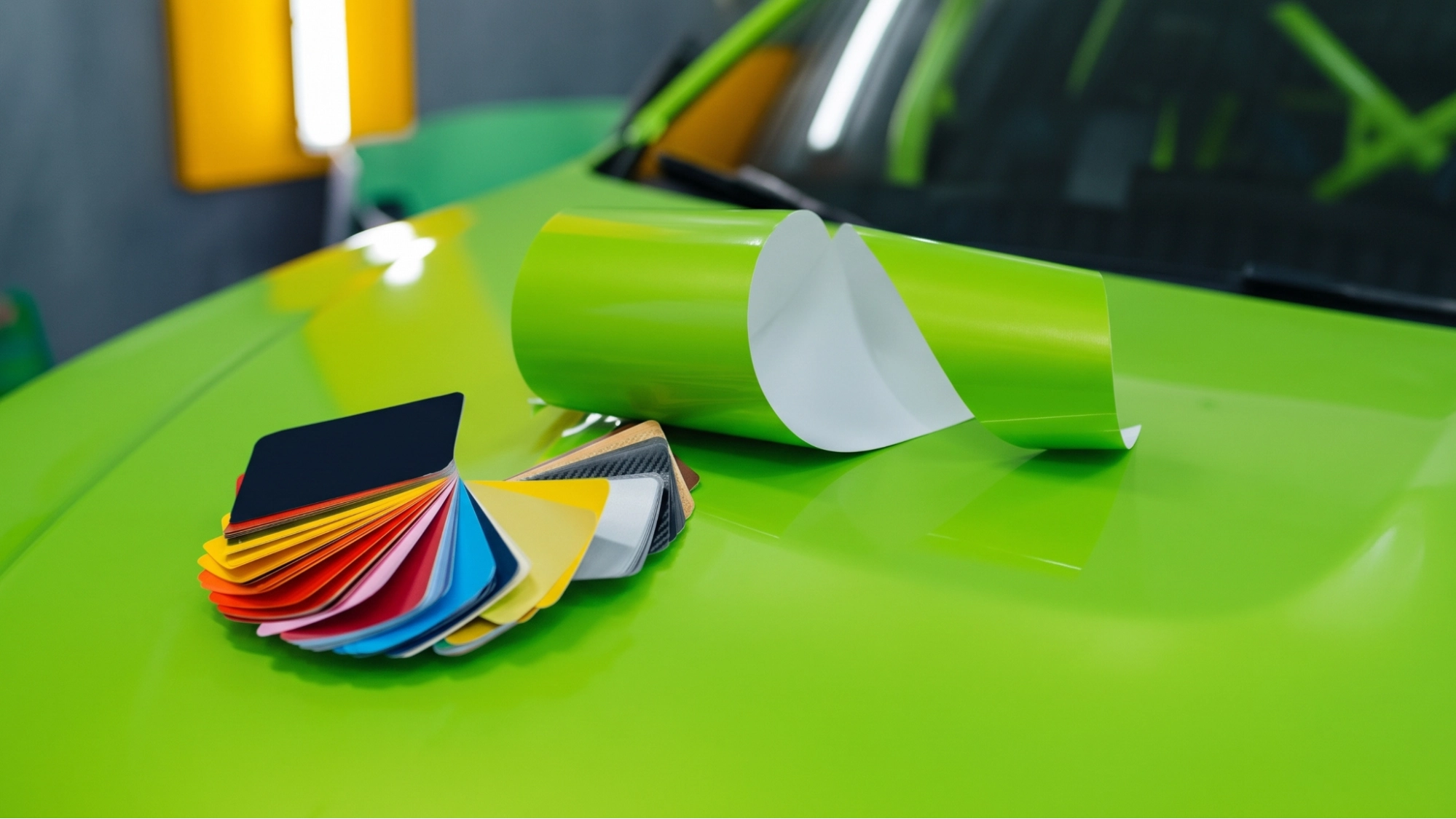
Fleet wraps use large-format printed vinyl to cover the majority or entirety of a vehicle’s painted surface. Coverage is the defining variable, and the industry generally recognises two tiers.
Full Fleet Wraps
A full wrap covers 75–100% of the body, including bumpers, door jambs where specified, and often the roof on box trucks and sprinter vans. The vehicle’s original colour is not visible in normal viewing. This permits edge-to-edge design, colour-blocked backgrounds, and photographic imagery.
- Full wraps also serve a secondary function: the vinyl layer and its adhesive act as a barrier against UV exposure, road salt, and minor abrasion. On a five-year fleet cycle in Ontario conditions, this can preserve resale value on the underlying paint.
Partial Fleet Wraps
A partial wrap covers 25–75% of the body. Common configurations concentrate coverage on the surfaces most visible to drivers behind the vehicle in stopped or slow-moving traffic, such as rear quarter panels, side cargo areas, and rear doors. Partial wraps let designers use the factory paint as a deliberate design element rather than working around it, which produces a more integrated result than lettering alone at meaningfully lower cost than full coverage.
Fleet Graphics vs Fleet Wraps: Direct Comparison
| Factor | Fleet Graphics | Partial Wrap | Full Wrap |
| Surface coverage | 10–25% | 25–75% | 75–100% |
| Relative cost per unit | Lowest | Moderate | Highest |
| Installation downtime | Hours | Under a day | One to two days |
| Design flexibility | Limited to text and marks | Moderate | Unrestricted |
| Paint protection | Negligible | Partial | Substantial |
| Typical service life | 5–7 years | 5–7 years | 5–7 years |
| Removal complexity | Low | Moderate | Higher |
Vehicle Decals vs Wraps: A Clarification
“Decal” is often used loosely. Technically, a decal is a single die-cut or printed vinyl element applied to a surface, making it a subset of fleet graphics, not a separate category. Suppliers who quote “decals” and suppliers who quote “graphics” may be describing identical work.
Ask any prospective installer for a coverage percentage and a panel-by-panel scope rather than a category label. This is the only reliable way to compare quotes across vendors.
Cost Considerations for Commercial Fleets
Cost to wrap a commercial truck varies with vehicle size, body complexity, vinyl grade, and design coverage. A cargo van has a simpler surface geometry than a box truck with roll-up doors, rivets, and corrugated panels, whereas the latter requires more material, longer installation, and higher-conformability vinyl.
In Ontario, environmental factors such as freeze-thaw cycles, road salt, and prolonged UV exposure also influence material selection. Premium cast vinyl generally provides better long-term performance for commercial fleets operating year-round.
Fleet volume typically reduces per-unit cost, since design work is amortised across the order and installers can batch identical applications. Detailed cost breakdowns by vehicle class are available in our guide to commercial truck fleet wrap pricing.
Calculating Fleet Branding ROI
Mobile advertising generates a lower cost-per-impression (CPI) than traditional print, television, or static billboard advertising. The return on investment for fleet graphics vs fleet wraps is measured by local visibility. A fully wrapped vehicle navigating high-traffic routes generates maximum daily impressions, potentially justifying its higher initial cost over a 3-to-5-year lifespan. Conversely, graphics and decals may provide a faster ROI for companies operating massive fleets where uniform identification is required across hundreds of units.
Businesses operating across Toronto and the GTA should also consider typical driving conditions, route density, and vehicle utilisation, as these factors influence both advertising exposure and the long-term value of fleet branding.
A local plumbing company operating five vans throughout Toronto may benefit from full wraps due to frequent exposure in residential neighbourhoods, while a large delivery fleet may choose vinyl graphics to brand more vehicles within the same budget.
Fleet Branding ROI Estimator
*Disclaimer: Estimates are based on industry averages for standard commercial vehicles. Investment costs may vary based on vehicle complexity and material choices. Impressions assume standard urban/suburban driving conditions. CPM is calculated over an average 3-year wrap lifespan.
Choosing Between Options for Your Fleet
Work through these questions in order:
- Do you own or lease the vehicles? Lease return conditions may restrict coverage or require documented professional removal.
- What are your routes? Urban, stop-heavy routes favour higher coverage. Highway routes favour bold, simple graphics readable at speed.
- Are your vehicles a consistent colour? Mixed-colour fleets are difficult to unify with graphics alone.
- What is your replacement cycle? Vehicles cycling out in under three years may not recover full-wrap investment.
- Is regulatory marking a requirement? Certain markings have legal size and placement standards that must be preserved regardless of coverage choice.
Businesses with service vehicles operating throughout the GTA often choose full wraps for maximum brand exposure, while contractors managing leased or frequently replaced vehicles may find fleet graphics a more cost-effective solution.
Why Choose Toronto Car Wrap As Your Fleet Branding Specialist
- Trusted GTA provider: Fleet branding for service and delivery operators.
- Weather-resistant materials: Cast vinyl rated for Ontario’s harsh conditions.
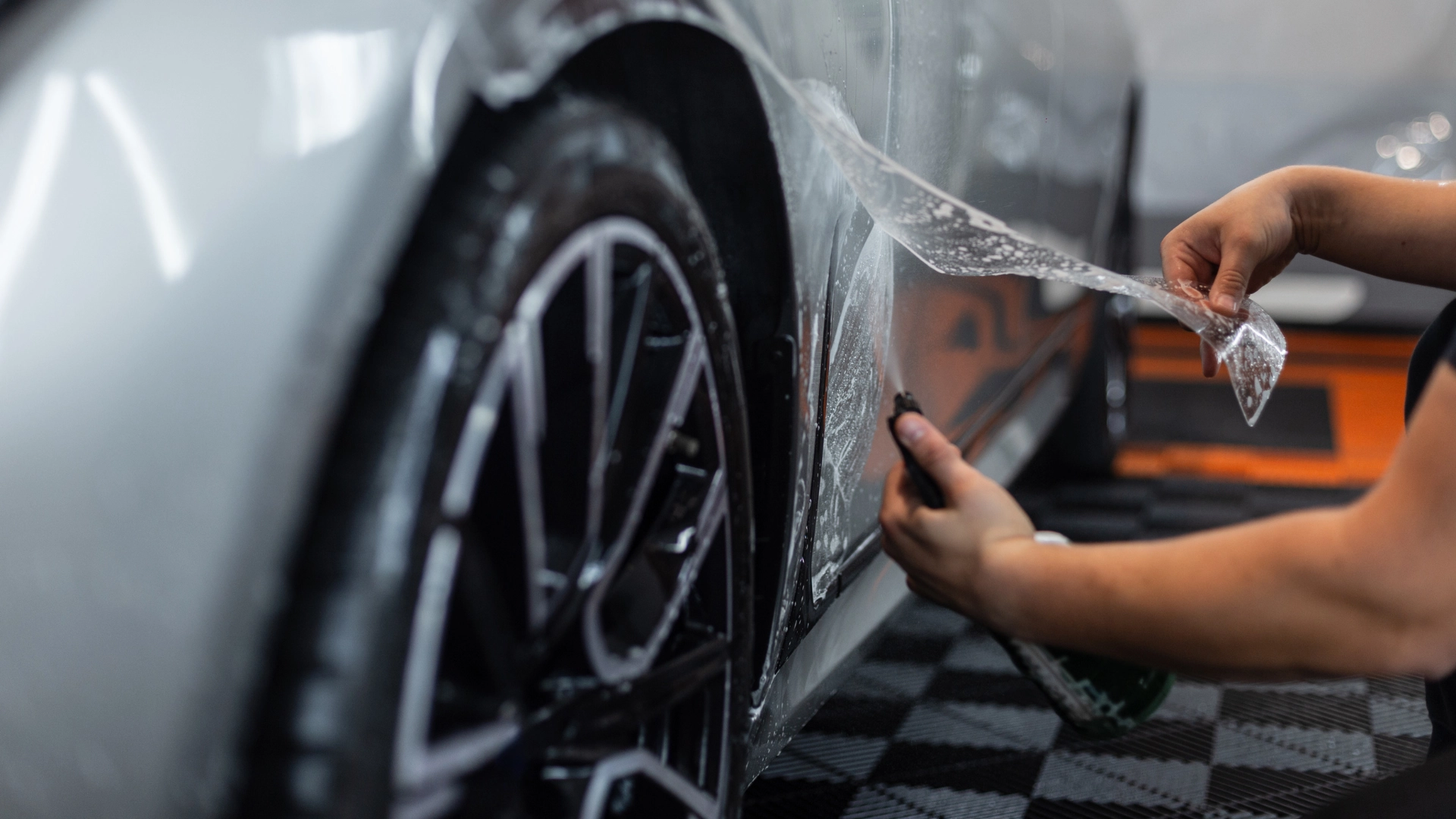
- Professional application: Installed by commercial surface preparation experts.
- Long-term strategy: Designed as a multi-year procurement decision.
- Custom specifications: Tailored to your routes, vehicles, and replacement cycle.
- Local Commercial Experience: Specifications developed for fleets operating across Toronto and the GTA, with consideration for Ontario driving conditions, replacement cycles, and commercial branding requirements.
Additional detail on programme options is available on our fleet branding vinyl wrap page.
For a scoped assessment of your fleet, including coverage recommendations and per-unit costing, contact our team to arrange a consultation.
Frequently Asked Questions
What is the difference between fleet graphics and fleet wraps?
Fleet graphics are partial vinyl applications, such as lettering, logos, and decals, covering roughly 10–25% of a vehicle. Fleet wraps cover 75–100% of the body, replacing the visible paint colour with printed vinyl. The primary practical differences are cost per vehicle, design flexibility, and the degree of paint protection the vinyl layer provides.
How much does it cost to wrap a commercial truck?
Cost depends on vehicle size, surface complexity, vinyl grade, and coverage percentage. A cargo van costs less than a box truck with corrugated panels and roll-up doors. Fleet orders typically reduce per-unit pricing because design costs are amortised and installation is batched. Request panel-by-panel scoping rather than category quotes when comparing vendors.
Do vehicle wraps damage paint?
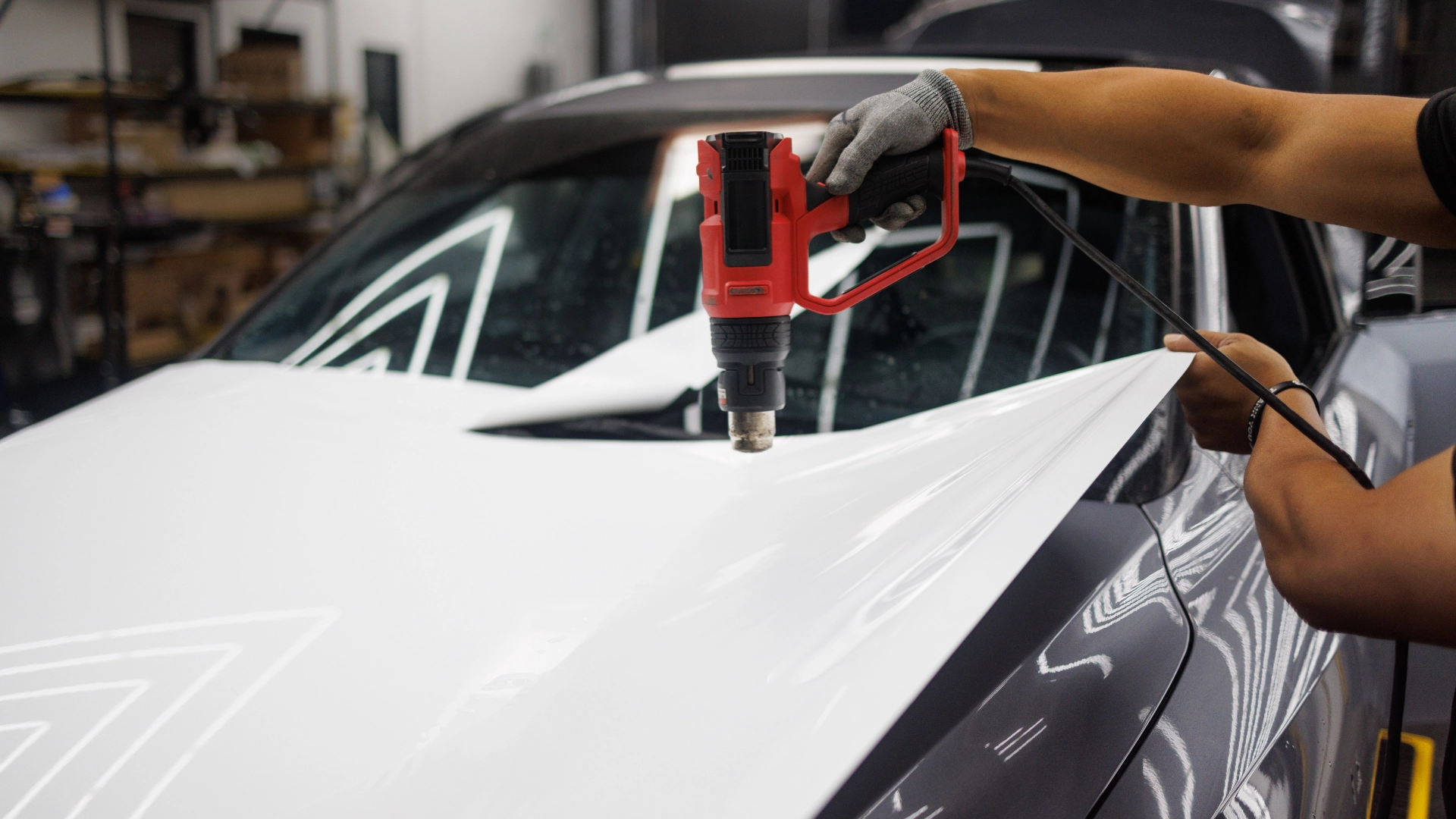
Professionally installed and removed wraps generally do not damage factory paint in sound condition. The vinyl and adhesive layer can protect underlying paint from UV exposure and road salt. Risk increases with aftermarket repaints, existing clear coat failure, or removal without controlled heat. Confirm your installer’s removal process before commissioning work.
How long do fleet wraps last?
Premium cast vinyl typically performs for five to seven years, though Ontario conditions — freeze-thaw cycles, road salt, and UV exposure — affect outcomes. Horizontal surfaces such as hoods and roofs degrade faster than vertical panels. Regular hand washing and avoiding high-pressure spray at panel edges extend service life measurably.
What is a partial wrap versus a full wrap?
A partial wrap covers 25–75% of the vehicle body, typically concentrated on rear quarters and side panels. A full wrap covers 75–100%, including bumpers and often the roof. Partial wraps use the factory paint as a design element; full wraps eliminate the original colour entirely and permit unrestricted design.
Are vehicle decals the same as wraps?
No. A decal is a single die-cut or printed vinyl element applied to a specific area — technically a subset of fleet graphics. A wrap covers the majority of the vehicle surface. Because suppliers use these terms inconsistently, request coverage percentages and panel-level scope rather than relying on category names when comparing quotes.
How long does fleet wrap installation take?
A vinyl lettering application typically takes a few hours per vehicle. Partial wraps generally require under a day. Full wraps on commercial vehicles usually take one to two days including surface preparation and curing. Fleet schedules can often be staggered so only a portion of vehicles is off the road at once.
Is fleet wrapping tax deductible in Canada?
Vehicle branding costs are generally treated as advertising or business expenses for Canadian businesses, though treatment depends on your corporate structure and whether the cost is expensed or capitalised. Toronto Car Wrap provides itemised invoicing suitable for accounting purposes. Consult your accountant for guidance specific to your situation.