To ensure a commercial vehicle wrap functions as a high-return advertising tool rather than just a costly aesthetic change, businesses must avoid several critical design mistakes before printing. The most common errors include overloading the design with text, especially more than seven words, failing to use a vehicle-specific 3D template causing seams and door handles to distort the message, selecting low-contrast colors or thin fonts that blur at highway speeds, and submitting low-resolution raster artwork instead of scalable vectors. By avoiding these layout, branding, and file-preparation failures, businesses can maximize legibility, extend the film’s lifespan, and keep production and removal costs predictable.
Key Takeaways
- Most vehicle wrap design failures are legibility failures: too much copy, weak contrast, and lettering sized for a screen rather than the road.
- OAAA recommends keeping out-of-home messaging to seven words or fewer so the message can be understood quickly from a distance.
- Design on a vehicle-specific template so seams, handles, and body lines do not cut through the message
Vector artwork, managed colour, and a full-scale proof prevent the reprints that inflate car wrap cost. - Film selection and removal planning are design decisions; they set the wrap’s lifespan and what it costs to rebrand later.
Why Custom Vehicle Wrap Design Matters More Than the Vehicle
The Out of Home Advertising Association of America’s (OAAA) Creative Best Practices Guide reports that creative determines about 75% of an ad’s effectiveness. Ads with two message elements are 21% more likely to be noticed than ads with five. A wrapped vehicle faces those constraints in a harder environment than a billboard: it moves, is often partly obscured by traffic, and is seen from every angle. Design decisions therefore outweigh vehicle size, film brand, or route.
Critical Layout and Legibility Mistakes
Designing on Flat 2D Artboards Instead of 3D Templates
A layout that reads well on a flat artboard often fails on a body panel. Door handles, seams, mouldings, and wheel arches interrupt text and images, and compound curves distort anything that crosses them. Designers should work on a scaled template for the exact make, model, and year, and check where each key element lands against every gap and break line. A cube truck wrap, for example, offers a near-flat box, while on a cargo van or sedan, the usable flat area is smaller than it looks on screen.
Overloading the Car Wrap with Text
Service lists, taglines, multiple phone numbers, and mission statements compete with each other and with the brand. The OAAA benchmark for out-of-home copy is seven words or fewer, and a wrap is rarely read for more than a few seconds. Anything beyond the core message belongs on the website the wrap sends people to.
Relying on Low-Contrast Colours and Thin Fonts
Colour combinations that look refined on a monitor often disappear at 30 metres in overcast light. The OAAA’s guidance: colours that contrast in everyday life contrast on out-of-home media. Thin, script, or condensed typefaces lose definition at distance, and light text on mid-tone backgrounds blurs in rain or at dusk. Bold sans-serif type, a dark-on-light or light-on-dark pairing, and open letter spacing hold up in Toronto winters, where road spray and short daylight are routine.
Sizing Lettering for Screens Instead of the Street
Letter height should be set by the distance at which most viewers see the vehicle. Letter size should be determined by viewing distance and the vehicle’s typical environment. Critical information viewed from farther away needs substantially larger lettering than information intended for pedestrians or parked-vehicle viewing. A parked service van is read from the first band; a vehicle in traffic on the 401 or the Gardiner from the second or third. Size critical information according to the distance and conditions in which the vehicle will typically be viewed.
Branding and Messaging Errors That Waste Ad Budgets
Failing to Establish a Clear Message Hierarchy
Viewers should be able to answer three questions in order: who is this, what do they do, and how do I reach them. Wraps fail when the logo is small, the industry is unstated (a name such as “Northgate Group” without a service delegation offers incomplete communication), or the contact method is buried in a service list. Size and placement should follow that order, with the primary message repeated on the rear and both sides.
Using Complex Calls-to-Action at Highway Speeds
The OAAA reports that 46% of people look up information after seeing something of interest on a billboard. That behaviour only converts if the trigger is usable from a moving vehicle: a short, memorable URL or a business name that is easy to search. Full-length URLs, multiple phone numbers, and long email addresses are rarely retained. QR codes work on vehicles that are parked or seen by pedestrians and are ineffective at highway speed.
Prioritizing Finish Trends Over Brand Recognition
Colour-shift, chrome, and textured films feature prominently among the 2026 vehicle wrap design trends, but mostly on personal vehicles. For commercial fleets, the same analysis points the other way: minimalist layouts, one or two brand colours, and consistency across every unit. A trend-led finish that varies from vehicle to vehicle fragments recognition, and specialty films carry shorter lifespans and higher cost than standard print films.
File-Preparation and Production Oversights
Submitting Low-Resolution or Raster Artwork
Logos pulled from a website or an email signature cannot be scaled to a 20-foot trailer without visible pixelation. Logos, type, and graphic elements should be supplied as vector files (AI, EPS, or PDF with fonts outlined); photographs and textures must meet the print shop’s resolution requirement at full physical size. Reprinting a panel because of a soft logo is one of the most avoidable additions to car wrap cost.
Ignoring CMYK Colour Management
Designers should follow the printer and film manufacturer’s colour-management requirements and use the appropriate ICC profile for the specific printer, media, and workflow. While 3M and Avery publish ICC colour profiles to calibrate the printer to the specific vinyl, setting the document to CMYK is the required first step to prevent a dull or shifted result. Brand colours specified in RGB or Pantone will not print identically on vinyl without conversion.
Stretching a Single Layout Across Mixed Fleet Vehicles
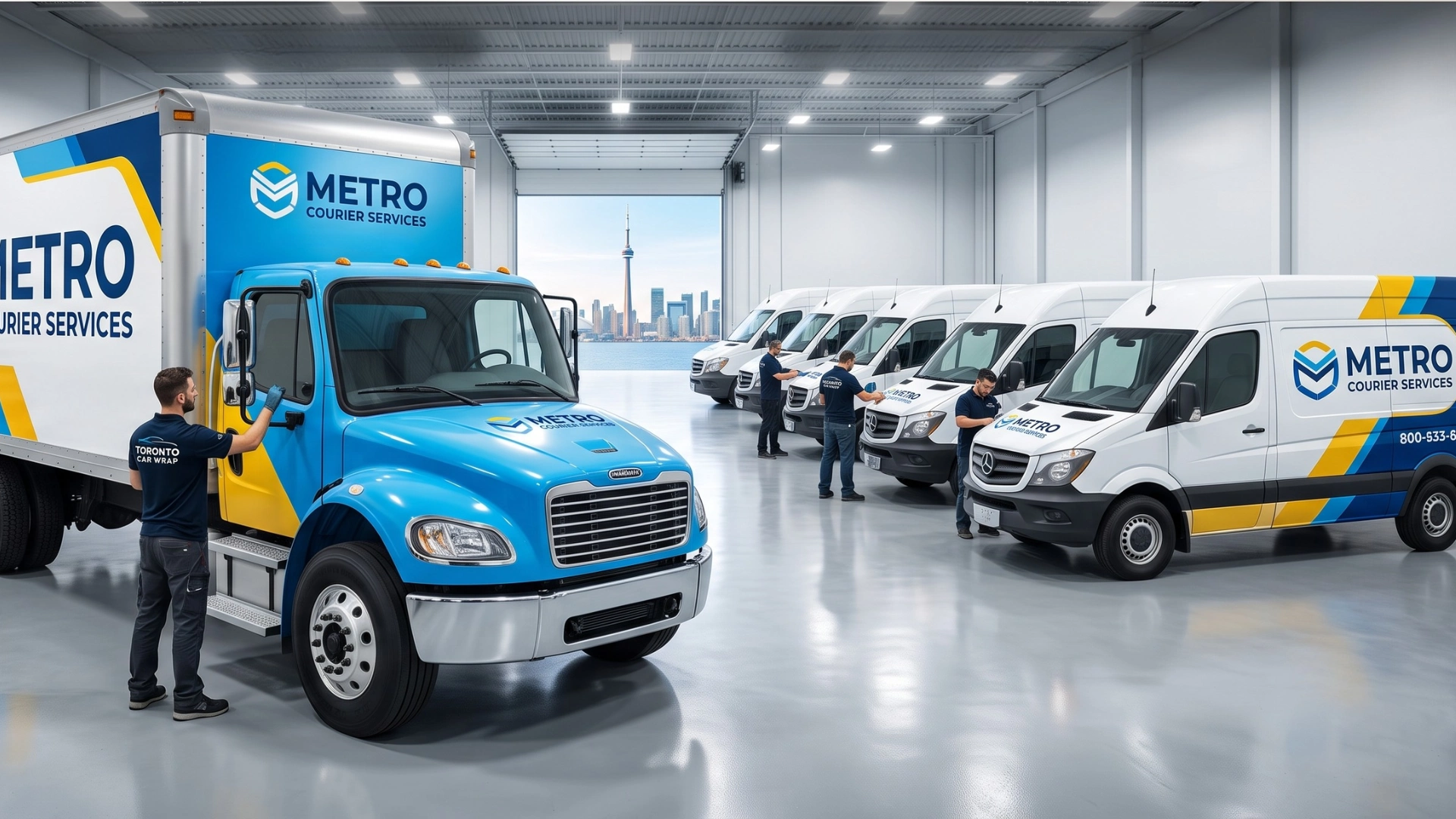
Fleets rarely consist of one vehicle type. A design built for a Sprinter van cannot simply be resized for a pickup, a cube truck, or a 53-foot trailer; proportions, flat areas, and viewing distances differ. The correct approach is a design system with fixed logo, colour, and typographic rules, and a layout adapted to each vehicle class. Per-unit design and material requirements differ too; the guides to truck and trailer wraps and commercial truck fleet wrap costs cover those differences.
Obstructing Windows and Restricted Glass
Ontario’s Highway Traffic Act restricts signs, posters, non-transparent material, objects, and certain colour coatings when they obstruct the driver’s view. Section 73 addresses obstructions, while section 74 requires the windshield and specified windows to provide a clear view. Designs that run graphics across those surfaces get cut at installation in ways the designer never planned. Rear and rear-side windows can carry perforated window film, which preserves outward visibility; front glass should be excluded from the artboard.
Automotive Vehicle Wrap Material and Lifecycle Failures
Choosing Vinyl Wrap Films Based on Price Alone
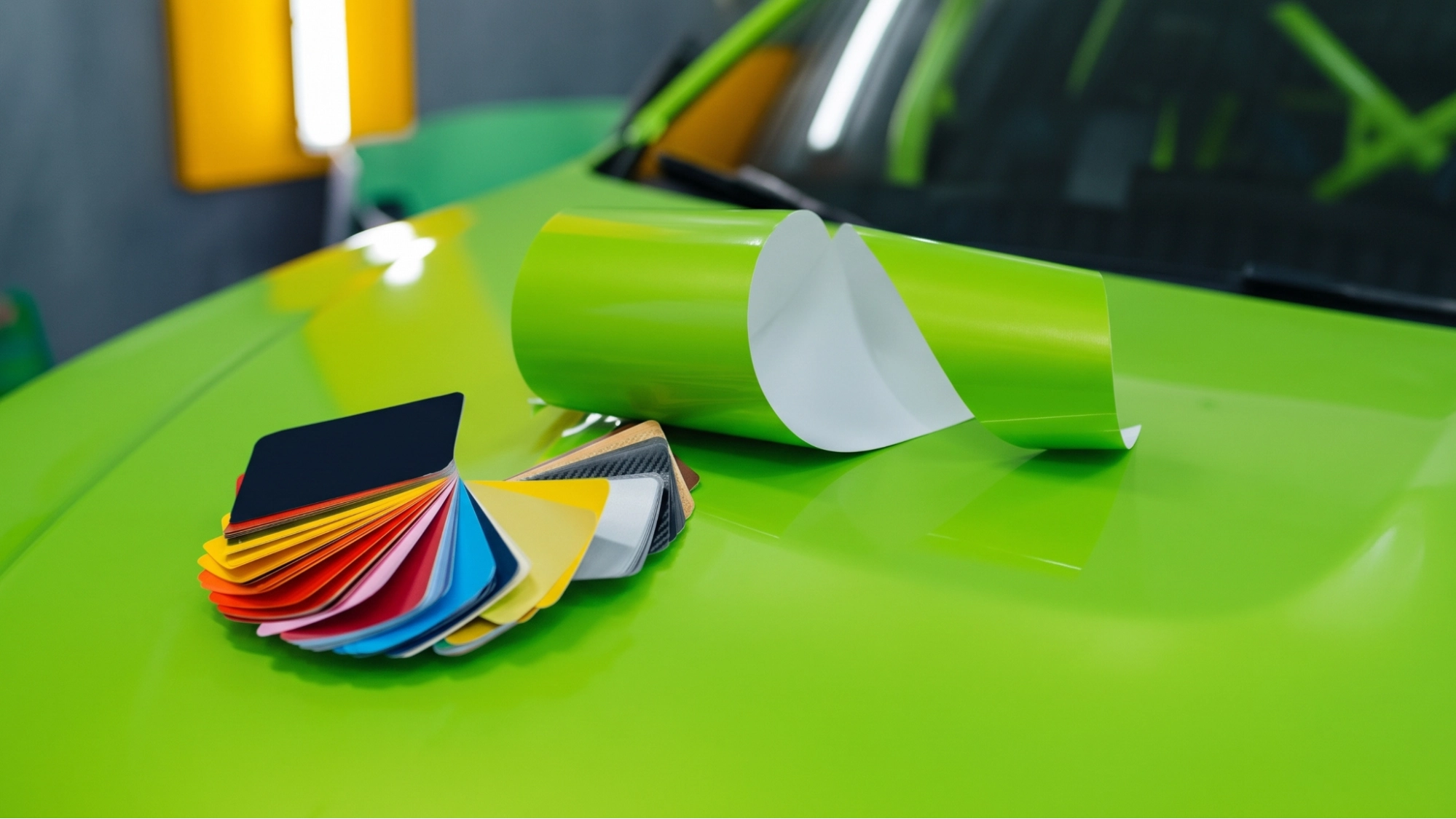
Film choice is a design input, not a purchasing afterthought. Premium cast films from 3M and Avery Dennison conform to compound curves and rivets without lifting; lower-cost calendered films suit flat panels and short-term campaigns. 3M’s vehicle graphics guidance states that no single film fits every application and that each film carries its own anticipated lifespan and warranty. Standard films typically last five to seven years in Toronto conditions and specialty finishes two to five; a design that assumes more life than the film can deliver fails early.
Failing to Plan for Professional Wrap Removal
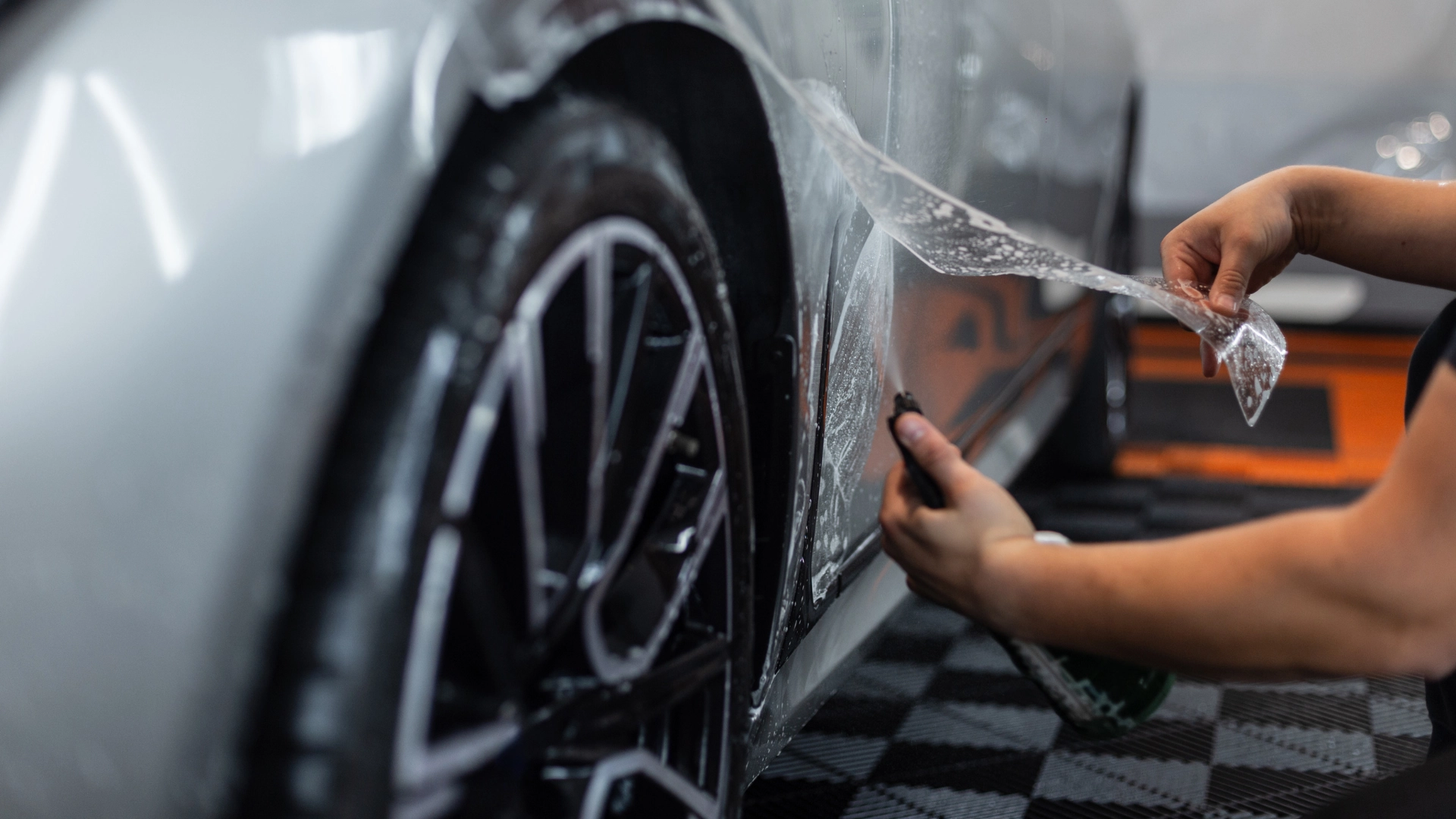
Every commercial wrap is removed eventually, at rebrand, lease return, or vehicle sale, and that removal is part of the project’s total cost. Wrap removal in Toronto typically runs $500 to $1,500 depending on the film’s age and condition. Aged or low-grade film costs more to remove because prolonged UV exposure depletes the vinyl’s plasticizers, making it brittle. Instead of peeling off in large, clean sheets, brittle vinyl snaps and chips off in tiny pieces, drastically increasing the manual labor required. Do-it-yourself removal with heat guns and hardware-store solvents frequently damages clear coat and leaves adhesive residue that must be corrected before a new wrap goes on. Professional vinyl wrap removal uses controlled heat and adhesive removers matched to the film, preserving the paint underneath. Film specified at the design stage determines how predictable that removal is.
Why Choose Toronto Car Wrap
- Design and installation under one roof ensures flawless graphic alignments.
- Layouts are built on accurate, vehicle-specific 3D scale templates.
- Every design is pre-checked against physical seams, handles, and trim.
- We exclusively use premium 3M and Avery Dennison cast films.
- Applications are completed in our climate-controlled Vaughan installation facility.
- Over 12 years of experience wrapping [commercial fleets across GTA.
- Guaranteed quality from certified installers.
Get Your Car Wrap Design Reviewed Before Printing
The mistakes above are invisible on a screen and obvious on the street, so having the artwork reviewed before printing can help identify design, template, file-preparation, and material issues before they lead to costly revisions or reprints. Toronto Car Wrap reviews commercial artwork for legibility, template fit, file readiness, and film suitability, and provides a written quote covering design, materials, installation, and, where required, removal of an existing wrap. Pricing is outlined in the car wrap cost guide for Toronto. Businesses across the GTA can request a design review or a custom quote from us.
Frequently Asked Questions
What is the most common vehicle wrap design mistake?
The most common mistake is treating the wrap as a brochure rather than a moving billboard. Too much text, small logos, and low-contrast colours make the wrap unreadable from the distances at which most people see it. Effective vehicle wrap design limits copy to a few words, prioritizes the business name and one contact method, and sizes lettering for the road.
How much text should be on a vehicle wrap?
As little as possible. The OAAA’s out-of-home benchmark is seven words or fewer for the primary message. On a vehicle, that usually means the company name, a short line describing what the business does, and one way to make contact, such as a memorable URL. Service lists and slogans should be moved to the website the wrap directs people to.
What colours are best for a vehicle wrap?
High-contrast pairings are best: dark text on a light background or light text on a dark one. Brand colours should be limited to one or two, and any combination should be tested at distance in daylight and in low light. Mid-tone-on-mid-tone schemes, thin light text, and busy gradients reduce legibility, especially in winter conditions with road spray and shorter daylight hours.
Do vehicle wraps need to be designed for a specific vehicle?
Yes. Each make, model, and year has different panel shapes, seams, handles, and window layouts, and a wrap designed on a generic template will not align correctly. Professional wrap shops design on scaled, vehicle-specific templates and check where every element falls before printing. Fleets with mixed vehicles need one consistent design system adapted separately to each vehicle type.
What file format is needed for vehicle wrap design?
Vector formats, meaning AI, EPS, or PDF with fonts converted to outlines, are required for logos, type, and graphic elements so they scale without pixelation. Photographs and textures should be supplied at the print shop’s specified resolution at full physical size. Files should be built on the shop’s vehicle template and, where possible, with the film manufacturer’s colour profile.
How much does a vehicle wrap cost in Toronto?
Full wraps in Toronto typically cost $3,000 to $6,000+ depending on vehicle size, film, and complexity, with trucks and vans at the upper end. Partial wraps run about $500 to $2,500+, and commercial design fees range from roughly $300 to $1,000+. Removing an existing wrap, when required, adds $500 to $1,500. A full breakdown is in the car wrap cost guide.
How long does a commercial vehicle wrap last?
Standard cast films from manufacturers such as 3M and Avery Dennison generally last five to seven years on vertical surfaces in Toronto conditions; specialty finishes such as chrome or colour-shift typically last two to five. Horizontal surfaces, UV exposure, road salt, and washing practices shorten that range. Durability is tied to the specific film series, not only the brand name.
Can I remove a vehicle wrap myself?
It is possible but not advisable on a commercial vehicle. Improper heat, sharp tools, and unsuitable solvents can damage clear coat and leave adhesive residue that must be corrected before the vehicle can be re-wrapped or sold. Professional vinyl wrap removal uses controlled heat and film-appropriate adhesive removers, and it is typically priced between $500 and $1,500 in Toronto.