
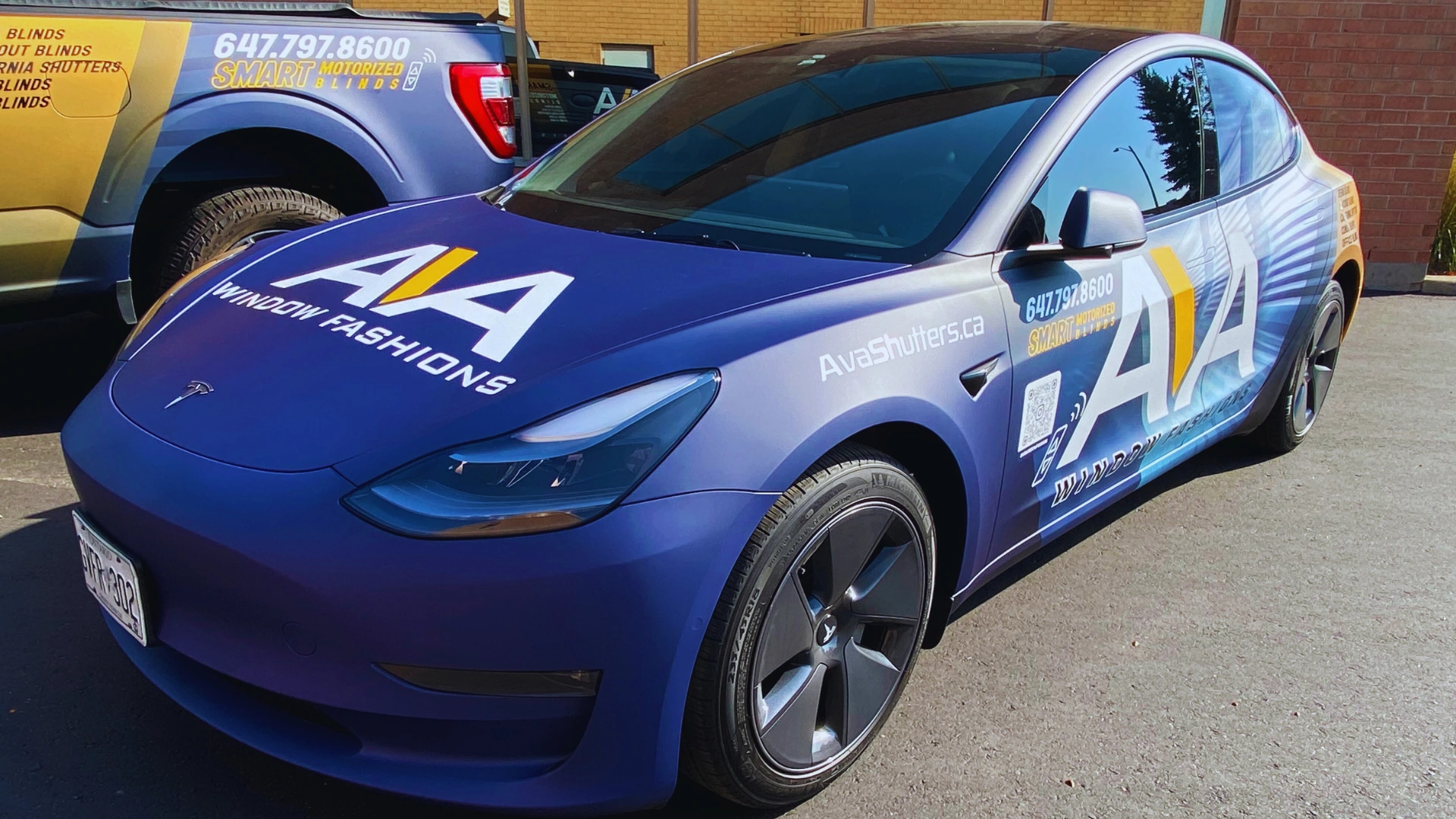
Vehicle wrap marketing in Toronto focuses on turning moving vehicles into high-frequency advertising assets that generate brand visibility, recall, and direct response. Effective vehicle wraps are not just visually appealing, they are designed to communicate a clear message within seconds, remain readable in traffic, and convert impressions into leads. This guide explains the design, layout, and material strategies that make vehicle wraps effective in Toronto’s dense urban environment.
What Makes a Vehicle Wrap Effective for Marketing in Toronto?
An effective vehicle wrap must communicate a clear message within seconds, maintain readability at a distance, and remain visually distinguishable in both daylight and night conditions. In Toronto’s high-density traffic environment, wraps compete with billboards, signage, and digital screens, making clarity and contrast essential for message retention and recall.
- Immediate Clarity: Your main message should be understood in under 3 seconds. Use a short slogan or clear company name; anything more will likely be missed.
- High Contrast: Choose bold colours and readable fonts that stand out in any light. If your text doesn’t pop off the background in day and night, fix the colour scheme.
- Simplicity: Don’t overcrowd the design. One strong visual and a brief tagline are far more memorable than a cluttered collage of information.
Vehicle Wrap Layout Strategies for Maximum Visibility
The layout of a vehicle wrap determines how information is processed while the vehicle is in motion. Strategic placement of text, logos, and calls-to-action ensures visibility from different viewing angles and distances.
One-Message Focus
Effective wraps zero in on a single message instead of trying to say everything at once. It could be one key service, one big benefit, or a tagline that defines your brand. By choosing one focal point, you make it easy for people to remember what you’re about.
Go Big on Key Info
In vehicle advertising, bigger is better for important text and images. Small details won’t be noticed at a distance. Make your company name, logo, and essential message large and bold. If someone can’t read it from two lanes over, it’s too small.
Use Each Side Strategically
Sides are what drivers alongside you see. Your name and a tagline about what you do should go here. The rear is your moving billboard for a call-to-action, such as a phone number or website, that people can read at a stoplight.
Vehicle Wrap Material Finishes and Their Impact on Visibility
The finish of a vehicle wrap affects how light interacts with the surface, influencing readability, glare, and visual attention in different lighting conditions.
Matte or Satin Finish – Less Glare
These low-gloss finishes prevent harsh glare from sunlight or headlights, keeping your wrap readable in all lighting conditions. They also give a sleek, professional look.
Metallic & Reflective – Maximum Attention
Shiny metallic colours and reflective accents catch the eye by bouncing light. At night, reflective film can make your vehicle visible from much farther away, so your wrap can’t be missed even in low light.
Specialty Wraps – Use Sparingly
Flashy options like colour-shifting vinyl or chrome finishes will draw attention for their novelty. But if overused they can overshadow your actual message. It’s best to use them as accents while keeping text and logos in high-contrast, easy-to-read colours.
Vehicle Wrap Branding Strategies That Generate Leads
Vehicle wraps function as mobile advertisements, so branding elements must be structured to guide viewers toward a clear action, such as visiting a website or remembering a service.
Keep It Simple
Less is more. A bold logo, a short tagline, and either your contact number or website are usually enough. This gives viewers just the information they need.
Use QR Codes Wisely
Only include a QR code if people will have time to scan it. The best spot is typically the back of the vehicle, where someone idling behind you might actually pull out their phone. Make sure the code is large and add a note like “Scan for a Quote” so they know what they’ll get. If your vehicle is mostly on highways or always moving, a QR code likely won’t get used. In that case, don’t clutter the wrap with one.
Be Consistent Across Your Fleet
If you have multiple vehicles, design your wrap as a template and use it on all of them. When people keep seeing the same van or truck design around town, it boosts brand recognition. Even a small bus fleet can look much larger when every car is a moving advertisement with the same colors and logo.
Common Vehicle Wrap Mistakes to Avoid
Poorly designed vehicle wraps reduce visibility, weaken brand recall, and limit marketing effectiveness. The following mistakes commonly reduce performance in real-world driving conditions:
-
Too Much Text
Cramming in too many details or a long list of services means most people will read none. Stick to the highlights.
-
Poor Contrast
Fancy colour schemes won’t help if your text fades into the background. Always use sharply contrasting colours, such as light on dark or vice versa, so your message jumps out.
-
Tiny or Ornate Fonts
If it’s hard to read from a distance, it’s not effective. Avoid small print and overly cursive or elaborate fonts. Assume viewers are catching a glimpse from 50 feet away.
-
Visual Clutter
Too many images or graphics can confuse the viewer. One strong visual with some breathing room will have more impact than trying to show everything at once.
Pre-Installation Checklist for Vehicle Wrap Effectiveness
Before printing and installation, evaluate whether the vehicle wrap communicates the primary message within seconds, maintains readability from multiple distances, and preserves brand clarity across all vehicle sides. Testing visibility in real-world conditions helps prevent costly redesigns and ensures marketing effectiveness.
Why Strategy Matters More Than Design Trends in Vehicle Wrap Marketing
Vehicle wrap marketing performance depends on clarity, contrast, and message hierarchy rather than visual trends. While new materials and finishes may attract attention, long-term effectiveness comes from structured design principles that prioritize readability, brand recognition, and consistent messaging.
Focus on strategic, viewer-friendly design choices. By sticking to proven principles and tailoring your wrap to real-world conditions, you’ll have a vehicle wrap that not only turns heads but also drives results.
NEED SOME HELP WITH YOUR CUSTOM DESIGN?
Frequently Asked Questions
Why keep a vehicle wrap design simple?
Drivers only have a few seconds to notice your car. A clean, simple design with one clear message is easier to spot and remember than a cluttered wrap.
How do I make sure my wrap is readable from far away?
Use high-contrast colours and big, bold text. To test, step back 20–30 feet; if you can’t read it easily, enlarge the important parts.
Do bright colours or flashy wraps work better?
Bright colours can help, but contrast is more important than just brightness. Flashy effects attract attention, but make sure your text stays clear and easy to read.
Should I put a QR code on my vehicle wrap?
Only if people have time to scan. If you add one, make it large and say “Scan me” nearby. In fast traffic, a short web address works better.
How often should I update my vehicle wrap design?
There’s no fixed rule. Many businesses refresh wraps every few years. Update yours if your branding changes or the wrap looks worn. A wrap can last about five years.
Will a car wrap damage my vehicle’s paint?
No. A quality vinyl wrap protects your paint. If installed and removed properly, it won’t hurt the finish – it can also shield against UV rays and minor scratches.
Are vehicle wraps really effective for local advertising?
Yes. One wrapped vehicle can generate tens of thousands of impressions. Wraps also have a high recall rate, making them one of the most cost-effective ways to advertise locally.
What finish is better, matte or gloss, for a wrap?
Matte or satin finishes reduce glare, so your design stays visible in bright sun. Glossy wraps are shiny, but glare can sometimes make details harder to see.