
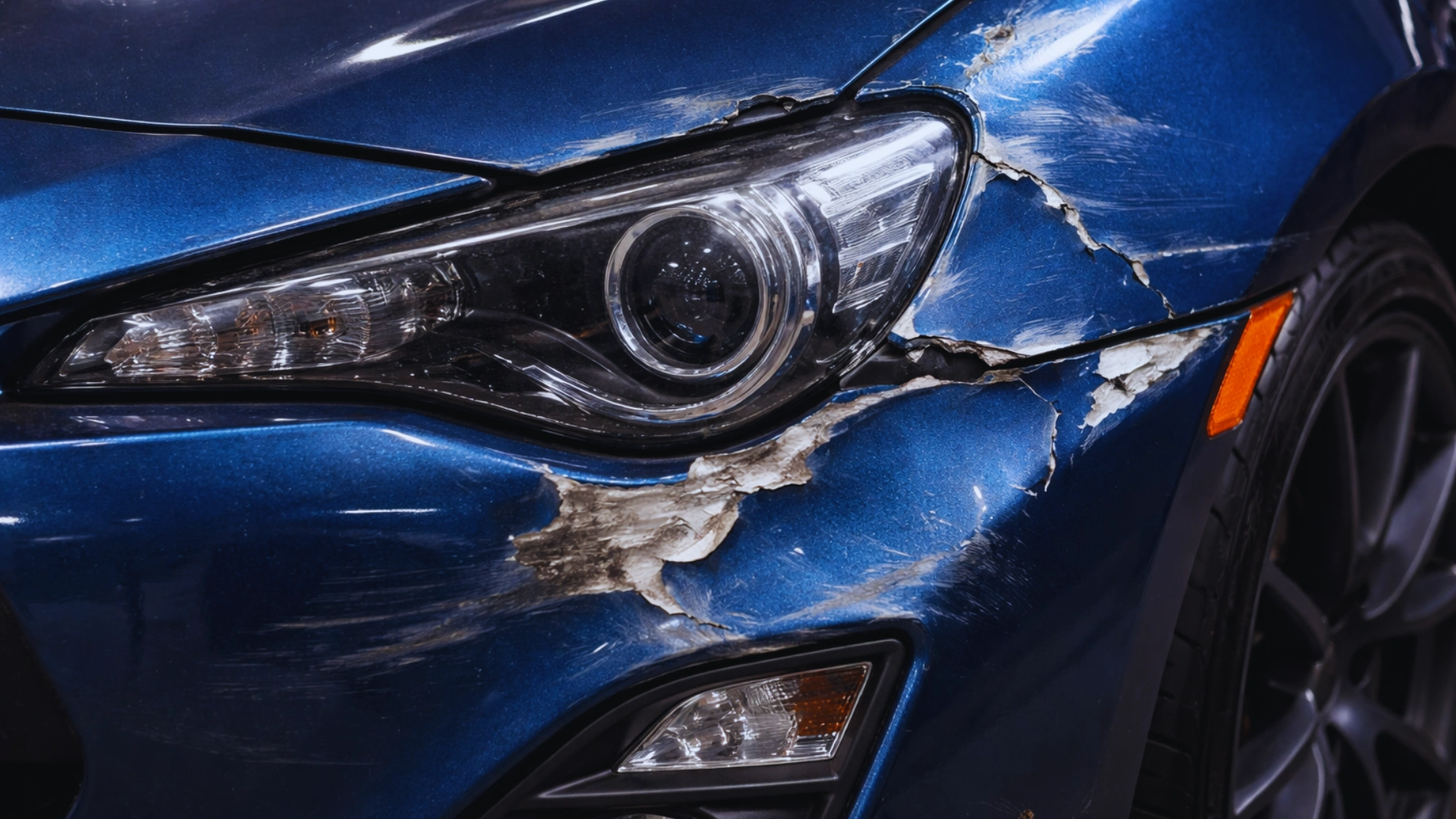
Common Types of Car Wrap Damage
A damaged car wrap should be repaired correctly to preserve both appearance and material integrity. Colour fading from sun exposure, light scratches or scuff marks from road debris, peeling edges, bubbling, and larger tears from accidents or aging are the most common forms of vinyl wrap damage. While vinyl wraps are durable and long-lasting, they are not immune to environmental stress or physical wear. Vinyl car wraps are durable and long-lasting, but they are not invincible. Below, we outline these common types of car wrap damage and how each typically occurs.
Fading and Sun Damage to Vinyl Wraps
Extended exposure to ultraviolet (UV) rays can gradually weaken a vinyl wrap, affecting both its appearance and durability. Over time, colours lose their intensity and the material itself can begin to break down, especially in areas that receive constant direct sunlight.
Key effects of sun exposure include:
- Colour fading, with brighter and more saturated hues typically losing vibrancy first
- Material drying, which reduces flexibility and makes the vinyl harder to work with
- Surface damage, such as brittleness, fine cracks, or peeling along edges in severe cases
Once a vinyl wrap has noticeably faded or become brittle, the damage cannot be reversed, and replacement of the affected sections is usually required. However, preventative measures such as parking in shaded areas and applying UV-protective coatings can significantly slow sun damage and help maintain the wrap’s appearance for longer.
Scratches, Scuffs, and Minor Tears
Normal day-to-day driving can lead to light surface damage on a vinyl wrap, including scratches, scuffs, and small nicks. These marks often come from common situations such as flying gravel, automatic car washes, or accidental contact with everyday items like keys or zippers.
Common causes and solutions include:
- Surface scratches and scuffs caused by road debris, brushes, or minor contact
- Heat responsiveness, as quality vinyl is thermoplastic and can soften when warmed, allowing minor scratches to smooth out and become less visible
- Temporary measures such as vinyl patches or protective tape may help prevent further spreading in the short term, but they are not permanent repair solutions.
In many cases, gentle heat from a heat gun combined with light buffing can significantly reduce the appearance of shallow scuffs. While small tears or punctures can sometimes be managed temporarily, a professional repair or panel rewrap remains the most reliable option for a seamless, durable result.
Peeling Corners, Lifting Edges, and Bubbles
It is fairly common for the edges of a vinyl wrap to lift over time, particularly in high-stress areas such as door handles, mirror bases, and the edges of hoods or bumpers. This usually develops as a result of adhesive fatigue, temperature fluctuations, or installation issues that prevent full adhesion from the start.
Typical issues and remedies include:
- Edge lifting at corners and contours, often caused by stress, heat cycles, or weakened adhesive
- Early-stage repairs, where lifted edges can be cleaned and re-adhered using an adhesive promoter or edge sealant
- Small air bubbles, which may appear days or weeks after installation or during weather changes and can often be released with a fine pin and smoothed flat
When addressed early, minor lifting or isolated bubbles can usually be corrected without replacing the wrap. However, extensive bubbling or large areas pulling away from the surface generally require professional removal and reapplication to ensure proper adhesion and a long-lasting finish.
Major Tears, Cracking, and Accident Damage
More severe vinyl wrap damage includes large tears, extensive cracking, or sections of vinyl that are missing entirely. This type of damage is commonly caused by accidents, vandalism, or natural material fatigue as a wrap reaches the end of its expected lifespan.
Common scenarios and repair considerations include:
- Large tears or missing sections, often resulting from collisions or intentional damage
- Age-related deterioration, with wraps around 5–7 years old frequently showing cracking, peeling, or colour breakdown
- Limited repair options, as severe or widespread damage usually makes spot repairs impractical
In these situations, replacing the affected panel, or in some cases the entire wrap, is typically the most effective solution. The advantage of sectional wrap installation is that localized damage does not always require a full vehicle rewrap, allowing a professional installer to restore a consistent appearance while avoiding unnecessary cost.
How Professional Wrap Shops Repair Damaged Vinyl Wraps
Fixing a damaged car wrap is a precise process that requires controlled tools, accurate material matching, and proper installation technique. At Toronto Car Wrap, repairs follow a structured workflow designed to restore appearance, adhesion, and durability as closely as possible to the original installation.
Inspection and Damage Assessment
Every repair begins with a detailed vinyl wrap inspection to assess scratches, bubbles, peeling, or cracking, determine repair scope, identify hidden issues, and recommend targeted panel repair or full section replacement.
Removing the Damaged Vinyl Section
Damaged vinyl is carefully heated, lifted, and removed using non-abrasive tools to protect paint. Adhesive residue is cleaned, leaving a smooth, contaminant-free surface ready for precise wrap repair.
Surface Prep and Applying the Vinyl Patch or Rewrap
The surface is cleaned, degreased, and prepped before applying precisely matched replacement vinyl. Installers align colour or graphics, apply controlled heat, eliminate air bubbles, and create seamless, nearly invisible joins.
Finishing Touches and Expert Quality Check
Edges are trimmed, post-heated, sealed, and inspected for perfect adhesion, alignment, and finish. Final quality checks ensure durability, uniform appearance, and a flawless result that restores the wrap completely.
Why a Professional Wrap Shop is Best For Car Wrap Repair
It can be tempting to attempt DIY wrap repairs, especially when damage appears minor. After all, some videos or kits promise quick DIY vinyl repair solutions. However, there are significant differences between DIY fixes and a repair handled by experienced professionals. Here’s why entrusting your car wrap to a professional wrap shop is usually the smartest and safest choice:
Risks of DIY Vinyl Wrap Repairs
Lack of Professional Skill and Technique
Repairing a vinyl wrap requires specialised skills, patience, and proper installation techniques. Without professional training, applying vinyl to curved areas such as bumpers or side mirrors often results in wrinkles, bubbles, overstretching, or misaligned patterns that are difficult to correct.
Poor Aesthetic Results and Colour Mismatch
Many DIY repairs are visually obvious. Patches may not match the original colour, texture, or gloss, and edges can begin lifting again if surface preparation is incomplete, making the repair stand out rather than blend in.
Risk of Paint and Existing Wrap Damage
Improper tools or excessive force during vinyl removal can scratch or damage the vehicle’s paint. Incorrect heat application may also cause adhesive failure, residue buildup, or permanent damage to the remaining wrap.
Limited Access to Proper Materials and Equipment
Most vehicle owners do not have access to exact vinyl matches, original design files, or large-format printers required to accurately recreate graphics or patterns, making seamless repairs nearly impossible.
Higher Long-Term Costs from Failed Repairs
A poorly executed DIY repair can worsen the damage, shorten the wrap’s lifespan, and ultimately cost more when professional correction or full panel replacement becomes necessary.
Benefits of Using an Experienced Professional Wrap Shop
Expert Damage Assessment and Cost-Effective Solutions
When you choose an experienced wrap shop, you benefit from accurate damage evaluation and informed repair recommendations. Professional technicians assess whether a small patch, partial panel rewrap, or larger replacement is truly necessary, helping you avoid unnecessary costs while ensuring the repair is done correctly the first time.
Access to Matching Materials and Original Design Files
Professional wrap shops have access to high-quality matching vinyl and, for custom wraps, original design files. This allows them to reproduce colours, finishes, and graphics precisely, ensuring the repaired section blends seamlessly with the rest of the wrap.
Precision Installation and Seamless Repair Techniques
Experienced installers use advanced techniques, such as precision overlap cuts and seamless edge blending, to make repairs virtually invisible. Their expertise ensures consistent alignment, smooth contours, and a factory-fresh appearance.
Professional Tools and Controlled Installation Environment
Wrap professionals work with specialised tools, including heat guns, plastic applicators, and precision knives, in clean, indoor environments. This controlled setting prevents dust, moisture, and weather from compromising adhesion or finish quality.
Warranty Protection and Long-Term Peace of Mind
Reputable wrap shops stand behind their work, often offering service guarantees or maintaining existing wrap warranties. This assurance protects your investment, ensures proper adhesion, and delivers long-term durability that DIY repairs simply cannot match.
Key Takeaways on Repairing a Damaged Car Wrap
- Not all wrap damage requires full replacement; many issues can be resolved with targeted professional repairs.
- Addressing damage early helps prevent spreading and reduces long-term repair costs.
- Wraps nearing the end of their lifespan may benefit more from replacement than repair.
- Professional repair ensures colour accuracy, adhesion integrity, and long-term durability.
- Expert handling protects both the wrap and the underlying vehicle paint.
Book a Professional Car Wrap Repair Consultation